 2x
2x 99.7%
99.7%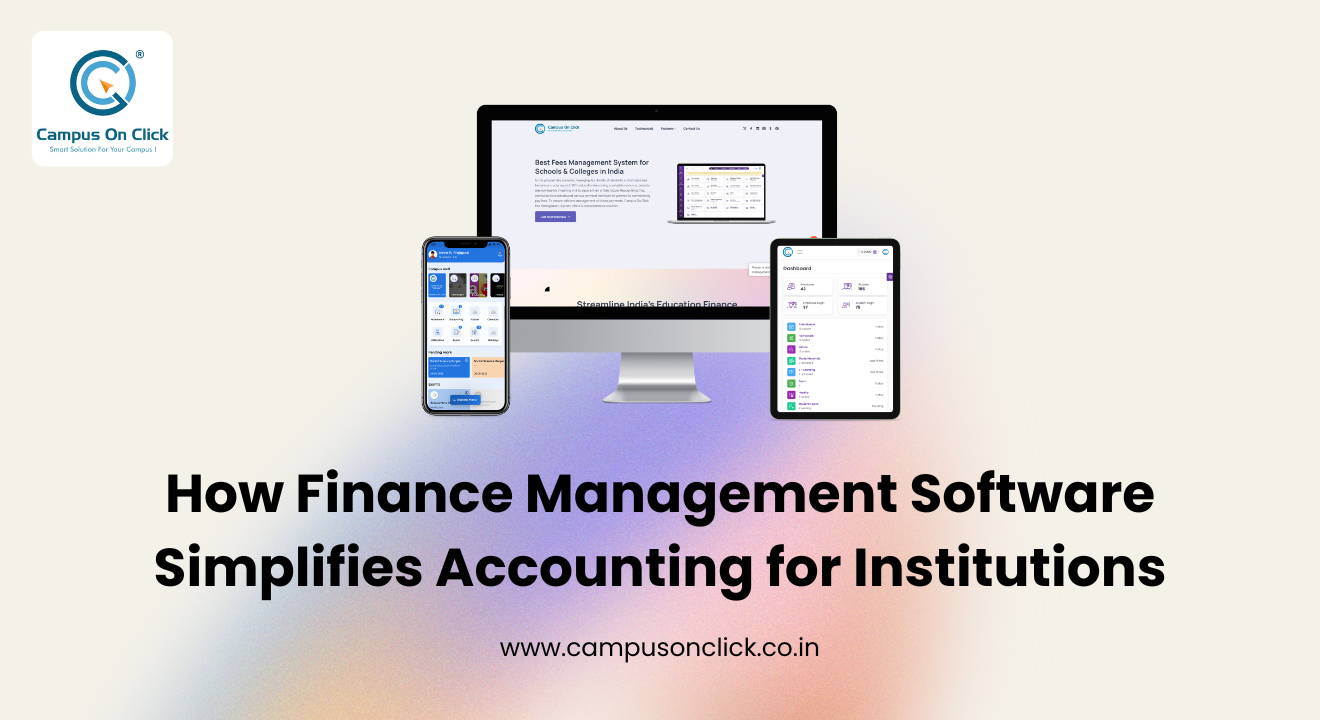
How Finance Management Software Simplifies Accounting for Institutions
Managing the finances of an educational institution-whether it's a K-12 school, a sprawling university, or a vocational center-is a high-stakes balancing act. Between thousands of student fee transactions, faculty payroll, vendor payments, and strict regulatory compliance, the margin for error is razor-thin.
Traditional bookkeeping is no longer just "slow"; it’s a bottleneck that drains resources and obscures financial clarity. Finance management software isn't just a digital ledger; it’s the engine that transforms institutional chaos into a streamlined, transparent, and high-growth operation.
The Hurdles of Traditional Accounting in Institutions
Before the digital shift, accounting departments were often buried under a mountain of paperwork. The challenges were systemic:
- Manual Data Entry Errors: A single misplaced decimal in a tuition record can lead to months of reconciliation headaches.
- Fragmented Systems: Fee records kept in one ledger and payroll in another lead to a "siloed" view of the budget.
- Delayed Reporting: By the time a manual quarterly report is ready, the data is often already outdated.
- Security Risks: Physical ledgers and unsecured spreadsheets are vulnerable to loss, theft, and unauthorized tampering.
The Role of Finance Management Software
Modern finance software acts as a centralized command center. It integrates every financial touch point-from the moment a parent pays a fee online to the second a teacher’s salary hits their bank account. By automating repetitive tasks, it allows institutional leaders to focus on academic excellence rather than chasing invoices.
Key Features that Drive Efficiency
- Automated Fee Management: Generate invoices, send automated reminders, and provide multiple online payment gateways.
- Granular Expense Tracking: Categorize spending by department, project, or event to identify leaks in the budget.
- Dynamic Payroll Processing: Automatically calculate taxes, deductions, and bonuses for hundreds of staff members.
- Real-time Reporting: Instant access to Balance Sheets, P&L statements, and Cash Flow charts.
- Smart Budgeting: Set departmental limits and receive alerts before an overspend occurs.
- Comprehensive Audit Tracking: A digital "paper trail" that logs every change made to the financial data for total accountability.
Multi-Stakeholder Benefits: Why Everyone Wins
For Administrators
- Operational Transparency: See exactly where every dollar is at any given moment.
- Resource Allocation: Use data to decide where to invest-be it new lab equipment or faculty development.
For Accountants
- Reduced Workload: Automation handles 80% of data entry, allowing accountants to focus on strategic financial planning.
- Easy Reconciliation: Bank statements and ledger entries are matched automatically.
For Management & Boards
- Strategic Insights: High-level dashboards provide the "big picture" needed for long-term expansion and sustainability.
- Risk Mitigation: Ensure the institution remains solvent and compliant with local laws.
For Parents (The School Focus)
- Convenience: Pay fees via mobile app or web portal without visiting the campus.
- Transparency: Access clear, itemized receipts and payment history instantly.
Automation, Compliance, and Security
Error Reduction & Accuracy
By eliminating manual entry, institutions typically see a 95% reduction in accounting errors. Software validates data as it’s entered, ensuring that the books always balance.
Compliance and Tax Handling
Tax laws for educational non-profits and institutions can be complex. Software automatically updates to reflect the latest tax brackets, GST/VAT requirements, and statutory filings, ensuring you never face a penalty.
Data Security & Cloud Benefits
Moving to the cloud means your data is protected by bank-grade encryption.
- Automatic Backups: Never worry about losing data to a hard drive crash.
- Role-Based Access: Control who can see sensitive financial data (e.g., a clerk can record fees but cannot view executive salaries).
Integration with School ERP
Finance software shouldn't live on an island. When integrated with a School ERP (Enterprise Resource Planning) system:
- Student Records: Automatically link fee payments to student profiles and attendance.
- Inventory: Connect library fines or canteen purchases directly to the student’s financial account.
- Admissions: Seamlessly transition a prospect’s application fee into their student ledger.
Comparison: Manual vs. Software-Based Accounting
| Feature | Manual Accounting | Software-Based Accounting |
| Data Entry | Time-consuming & prone to error | Automated & highly accurate |
| Reporting | Takes days or weeks | Instant, real-time generation |
| Security | Low (Paper/Spreadsheets) | High (Encryption & Backups) |
| Fee Collection | Cash/Cheque (Manual tracking) | Online Gateways (Auto-tracking) |
| Audit Readiness | Difficult and stressful | Always audit-ready with logs |
| Cost | High labor costs | Low overhead, high ROI |
Export to Sheets
Case Study: Green Valley International School
The Challenge: Green Valley struggled with a 15% late-payment rate and spent 40 hours a month manually reconciling payroll. The Solution: Implemented a cloud-based Finance Management System with integrated SMS reminders. The Result: * Late payments dropped to 2% within three months.
- Payroll processing time was reduced to 4 hours.
- The school saved $12,000 annually in administrative overhead.
ROI and Long-Term Cost Savings
While there is an initial investment, the ROI of finance software is usually realized within the first year. Savings come from:
- Reduced Staff Hours: Redirecting labor to more productive tasks.
- Eliminating Late Fees: Both for the institution (vendor payments) and for the parents (fee collection).
- Paperless Operations: Savings on printing, storage, and physical mailing.
The Future of Financial Automation
We are entering the era of AI-driven Finance. Future systems will offer:
- Predictive Budgeting: AI forecasting future enrollment and revenue trends.
- Voice-Activated Reporting: Asking your system, "What is our current liquidity?" and getting an instant answer.
- Blockchain Receipts: For immutable, fraud-proof transaction records.
Ready to revolutionize your institution's finances?
Schedule a Free Demo today and see how our Finance Management Software can save you time and money.
Frequently Asked Questions (FAQs)
1. Is finance management software difficult for non-accountants to use?
No. Most modern platforms feature intuitive dashboards designed for users with varying levels of financial expertise.
2. Can the software handle multiple bank accounts?
Yes, most systems allow you to link and manage several accounts, facilitating easy inter-account transfers and reconciliation.
3. Does it support different fee structures for different grades?
Absolutely. You can customize fee heads (tuition, transport, lab, sports) for different student categories or scholarship tiers.
4. How does the software help during tax season?
It generates all necessary tax reports and summaries with a single click, ensuring you are compliant with local regulations.
5. Is our financial data safe in the cloud?
Cloud providers use advanced encryption and multi-factor authentication, making it significantly safer than keeping records on a local computer.